
Vivid Broadcast builds agile remote production network around Calrec’s True Control 2.0, Argo M and Type R
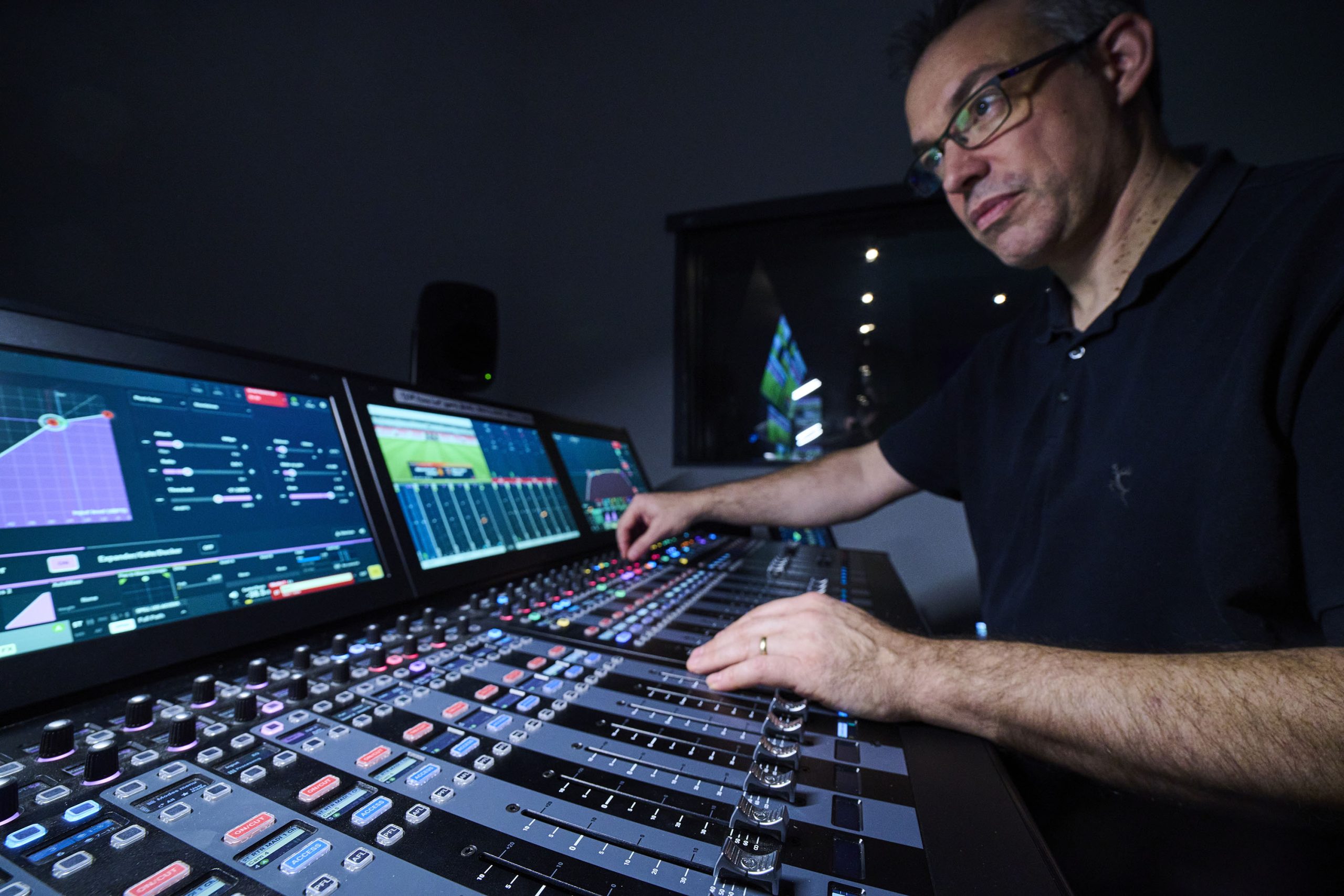
Designed to embrace multiple production processes and deliver high-end live broadcast workflows, Vivid Broadcast has combined Calrec True Control 2.0 enabled consoles across its operation. The company has installed a 36-fader Argo M and multiple Type R control surfaces in its Remote Production Centre (RPC), alongside the recently launched 48-fader Argo M in its new next-generation Barra OB unit. Based in Surrey, UK, Vivid Broadcast is an early adopter of remote production, having embraced the workflow long before Covid normalised it, and says Calrec’s versatile technology is key to delivering the right solution for every production.
“Flexibility has to be at the heart of any remote production set up and our investment in Calrec really supports this,” explains Francis Cousins, Vivid Broadcast’s Head of Technical Innovation. “It was vital for us to have a range of solutions that gave each gallery or production the tools they need to do the job while working within budget. Our partnership with Calrec has been central to this.”
Purpose-built to transform live workflows, Barra is already proving its technical prowess. Simon Cox, Vivid Broadcast’s Sound Guarantee says the new 48-fader Argo M is the perfect solution for the remote unit, which is currently being used for Sky Sports Women’s Super League (WSL), feeding directly into Sky’s galleries in Osterley.
“To bring the audio into the desk, we use a combination of AES67 audio interfaces deployed within the stadium, combined with traditional backups to fulfil contractual requirements. This incorporates some of the surface’s local I/O alongside the AoIP links to the main network stack, allowing for Dante, MADI and analogue cards to be installed into the Calrec modular I/O. This combination allows for easy integration with third-party baseband equipment, whilst allowing for the deployment of Calrec Fixed Format I/O to keep everything in the digital domain where possible.”
The RPC seamlessly integrates with Vivid Broadcast’s four-camera remote vans, as well as the 20-camera Barra unit, cloud production platforms, and third-party client broadcast centres, which Cousins says gives production teams the ability to work smarter, faster, and more sustainably. Vivid also takes advantage of the Calrec Assist browser-based control interface to manage the desk remotely, while the Calrec Connect IP connection and management tool simplifies management of Vivid’s AoIP streams.
With flexibility a key driver, Vivid’s RPC is designed to enable its sound control rooms to work across multiple galleries. The 36-fader Argo M sits in Sound Control Room 1 alongside four virtual mixers split across two compact Type R control surfaces located in multiple galleries.
“During a production, the Type Rs can be driven by our Bitfocus Buttons automation/control system, enabling a single supervising engineer to sit across all galleries and make fine adjustments to the mixes,” explains Cox. “For more ambitious projects, the Type Rs can be driven from the main Argo surface via True Control 2.0, equipping engineers with a powerful amount of control and easy access to the wider facility.”
Vivid’s flexible setup enables the company to work across a much wider variety of projects and clients, delivering live coverage not only for sport and entertainment, but also for corporate events, fashion, and a variety of hybrid productions.
“We have always looked for equipment that supports powerful external control and monitoring to give engineers a granular level of visibility from any remote location, explains Cousins. Calrec’s well-featured hardware and web interfaces are critical in achieving this alongside their strong integrations and support.”
“Just like with traditional OBs, each remote project has its own requirements and can utilise a number of workflows,” Cousins adds. “We aimed to create a scalable environment that can embrace many different production processes to offer production teams the same gallery experience whether they are working in a traditional workflow with all signals returning to the RPC, a cloud operation, or a hybrid.
“The remote sound area can operate efficiently with a single guarantee or accommodate a dedicated sound supervisor when required, while the Argo M supports both on-site mixing and comprehensive embedding and distribution across all channels. Calrec’s True Control 2.0 and integrated I/O means our Barra unit also enables seamless synchronisation whether it is feeding into a client’s gallery, such as Sky, or back to our own RPC, allowing off-site sound supervisors full control of gain structure in real time.”
Rory Springthorpe, Vivid Broadcast’s Director and Co-Founder says the company is excited about the advantages True Control 2.0 delivers, both within the Barra unit and the RPC.
“Calrec’s infrastructure sits at the core of all our WSL productions, whether that’s the larger productions for Sky, the remote workflow with Aurora Media Worldwide, or the BBC’s Women’s Football Show.
“We know Calrec is committed to developing the right remote workflows and delivering a range of solutions depending on the requirements, recognising each remote production workflow can be unique whilst still ensuring the same level of redundancy and operation.”
“Vivid Broadcast is a prime example of how the industry is evolving,” says Calrec Regional Sales Manager, Anthony Harrison. “Productions are no longer defined by physical location, and the demand for flexible, distributed workflows is only accelerating. Like Vivid, we’ve been developing remote broadcast workflows since 2016, and our goal has always been to give engineers the tools and control they need wherever they’re working; whether that’s in a truck, a remote production centre, or a hybrid of both.”
Latest IAMT News
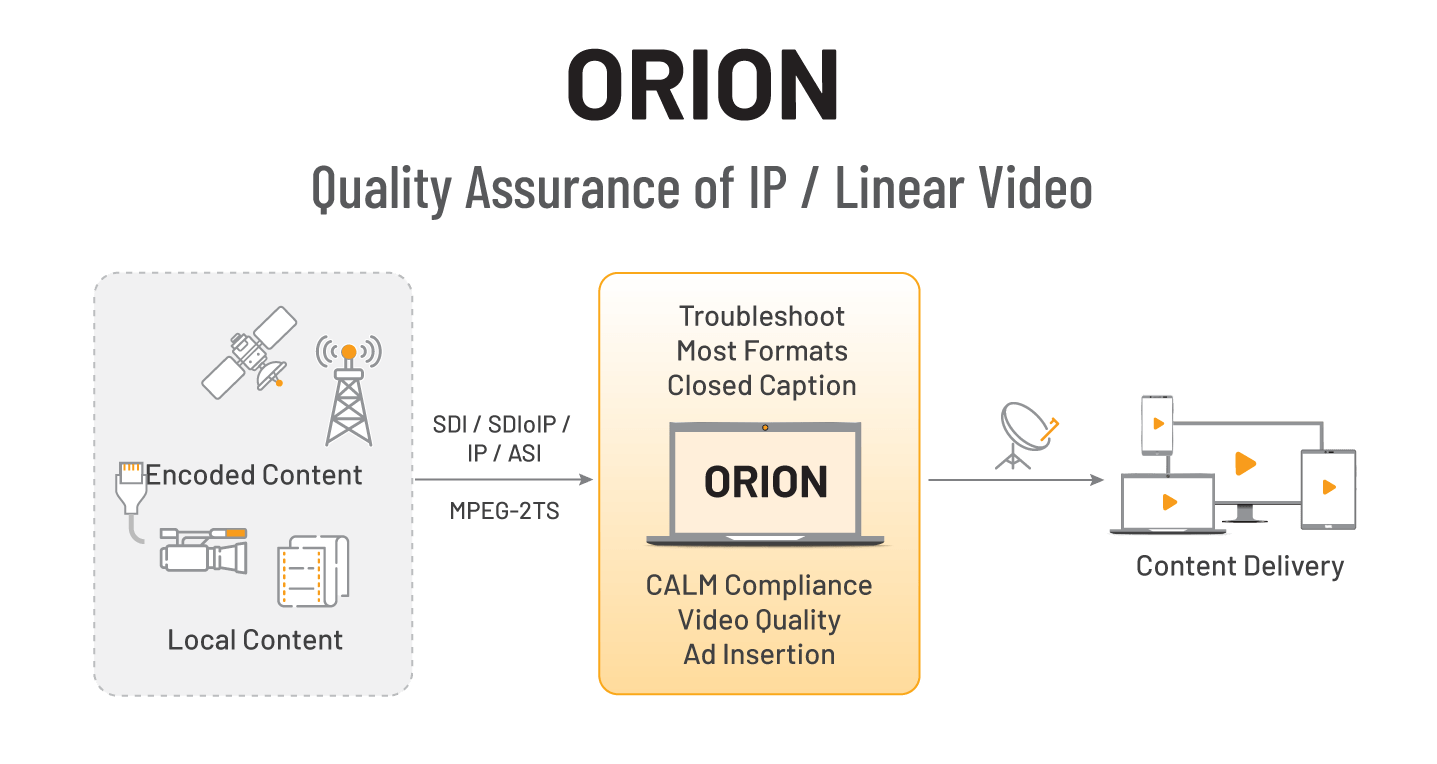
Interra Systems Enhances ORION With Stream Recording and BATON Media Player Integration for Advanced Debugging

Astro selects Broadpeak for high performance streaming and CDN solutions in pay-TV transformation

Sign-Up Here
Industry news, event updates and more. Sign-up for the IAMT Newsletter.